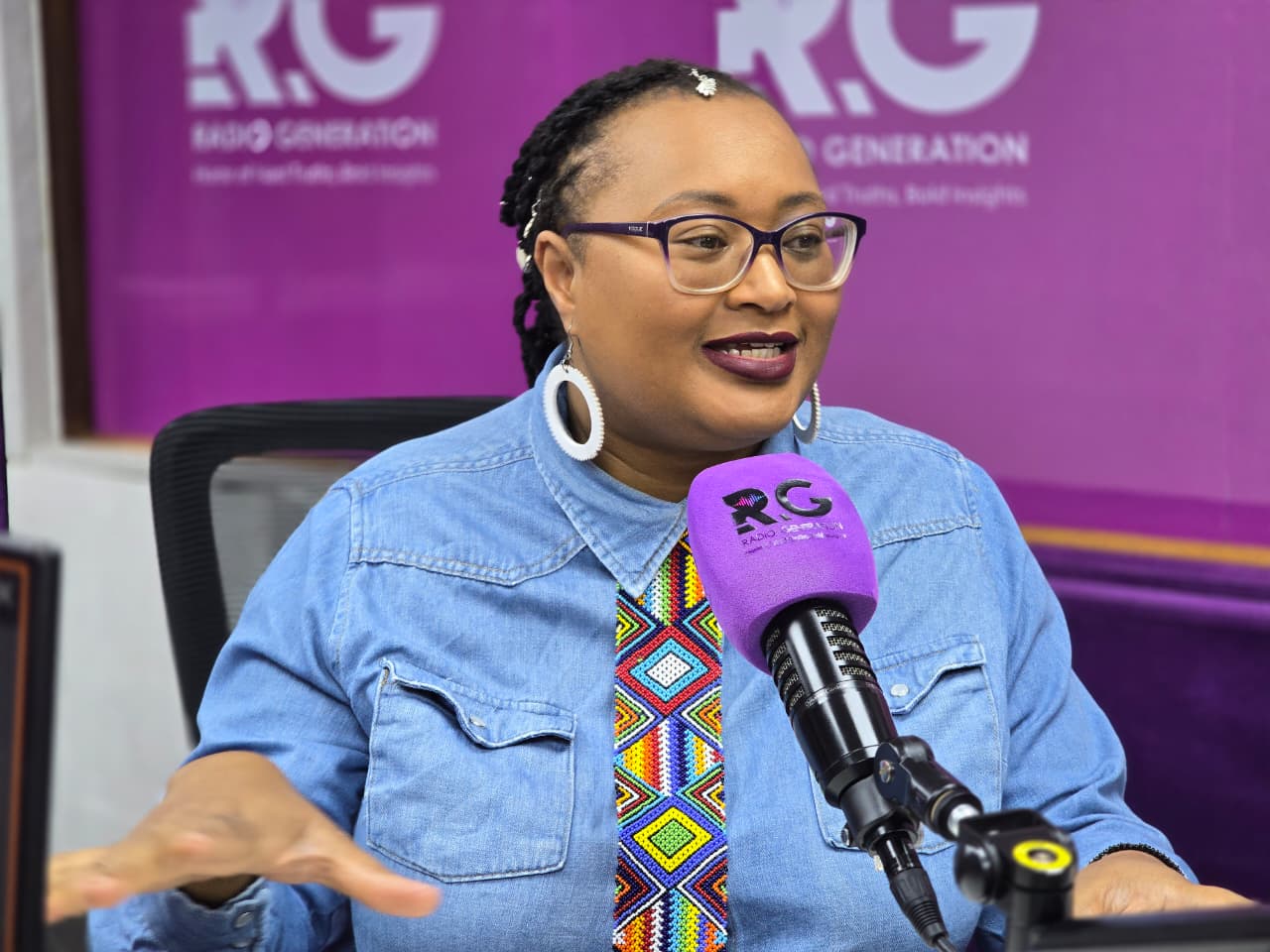
Tanzania’s long-standing political calm could be masking deep cracks beneath the surface, Neema G. Mutemi, a positive youth development expert, has warned.
Speaking on Radio Generation on Wednesday, Mutemi said growing economic frustration, suppression of dissent, and limited political reform are quietly eroding public trust, setting the stage for a legitimacy crisis that could destabilize the country’s political order.
“No protest comes from nowhere,” she cautioned. “You saw it coming, you just refused to see it. Governments that ignore warning signs create blind spots that explode later.”
According to Mutemi, the illusion of stability in Tanzania is built on control, not consent, and that imbalance, she said, “cannot hold forever.”
Mutemi described Tanzania’s current political environment as one where discontent brews beneath an organized system that limits open dissent.
“The most dangerous thing for this region,” she said, “is having an election with a big chunk of the population feeling excluded. Once people stop believing in the democratic process, they’ll create their own rules for what democracy means.”
Since assuming office in 2021 following the death of President John Magufuli, Tanzania’s President Samia Suluhu Hassan, popularly known as Mama Samia, has faced increasing pressure over her government’s democratic record.
While her early move to lift Magufuli’s ban on opposition rallies was welcomed as a sign of political opening, the momentum for reform has slowed, and old authoritarian habits have resurfaced.
Mutemi notes that unlike Kenya, where political disagreements manifest loudly, Tanzania’s structure under the long-ruling Samia's Chama Cha Mapinduzi (CCM) party creates a subtler form of resistance.
“You can’t judge Tanzanian activism by silence,” she said. “Their protests are coded, digital, and increasingly vocal in Swahili spaces online. It’s quiet, but it’s powerful.”
Many Tanzanians feel politically excluded, arguing that the ruling Chama Cha Mapinduzi (CCM) party still dominates every level of power.
Mama Samia, meanwhile, has sought to consolidate her leadership, balancing international expectations of reform with an assertive approach to internal control.
Opposition leaders, including Tundu Lissu and Freeman Mbowe of CHADEMA, continue to face harassment, arbitrary arrests, and prosecution from the government.
Human rights reports point to a pattern of intimidation, restricted civic space, and the silencing of dissenting voices through police crackdowns and prolonged detentions.
Mutemi warned that relying on the military or police for stability, the monopoly of force may offer temporary peace but weakens legitimacy in the long term.
“Monopoly of force works until it doesn’t,” she explained. “History shows that governments that rely on coercion only delay, not prevent, the inevitable demand for legitimacy.”
She pointed to regional trends showing that when states silence dissent, they only push resistance underground.
“When the state captures major influencers, musicians, and public figures, it creates a vacuum that’s filled by unknown micro-influencers,” she said. “Those are the voices driving the real conversation now.”
Mutemi argued that the danger for any government lies not in visible protests, but in ignored frustrations.
“It’s not the big things that break nations, it’s the small, everyday injustices that people endure quietly,” she said.
“When people can’t afford food or healthcare, when they feel unseen and unheard, that’s when the state begins to crumble.”
She traced much of Tanzania’s public frustration to unfulfilled constitutional reforms and economic pressures, saying citizens are now questioning whether the system still serves them.
As Tanzanians head to the polls today, she cautions the growing legitimacy gap, which could have ripple effects across East Africa.
“No one benefits from a democratic collapse,” she said. “If Tanzania loses the trust of its people, it weakens regional stability, because legitimacy, once lost, is almost impossible to rebuild.”